In the industrial sector, software is not just a work tool, but a true critical infrastructure. Systems like SCADA control complex plants and production processes, often connected to global supply chains: their malfunction can have direct impacts on safety, efficiency, and business continuity. Keeping software updated, therefore, is not an afterthought but a strategic necessity.
The first aspect concerns the of your digital ecosystem. Cyber threats evolve rapidly, and only the latest versions of software receive timely patches that reduce the attack surface. Remaining stuck with outdated releases exposes systems to known vulnerabilities that can be exploited extremely easily.
Another crucial theme is theefficiencyUpdates don't just fix bugs; they introduce optimizations and new features that reduce downtime, simplify diagnostics, and improve the operating experience. In industries where every minute of downtime translates into significant financial losses, even small improvements have a tangible impact.
The front of the regulationsMany regulations, especially in the energy and manufacturing sectors, impose safety and traceability standards that only updated software versions can fully support. Falling behind risks fines or even the inability to certify the production process.
Finally, there is the topic of obsolescenceAs time passes, it becomes more difficult to find support for older versions. This translates into hidden costs, longer response times, and a real risk of system downtime in the event of a failure.
In this context, the maintenance fee It plays a key role. While in the past—especially in Southern European countries—it was seen as an avoidable expense, today it is increasingly perceived as an investment. In Nordic countries, a more mature culture of preventative maintenance has long existed: don't wait for problems to arise, but prevent them through regular updates and guaranteed support.
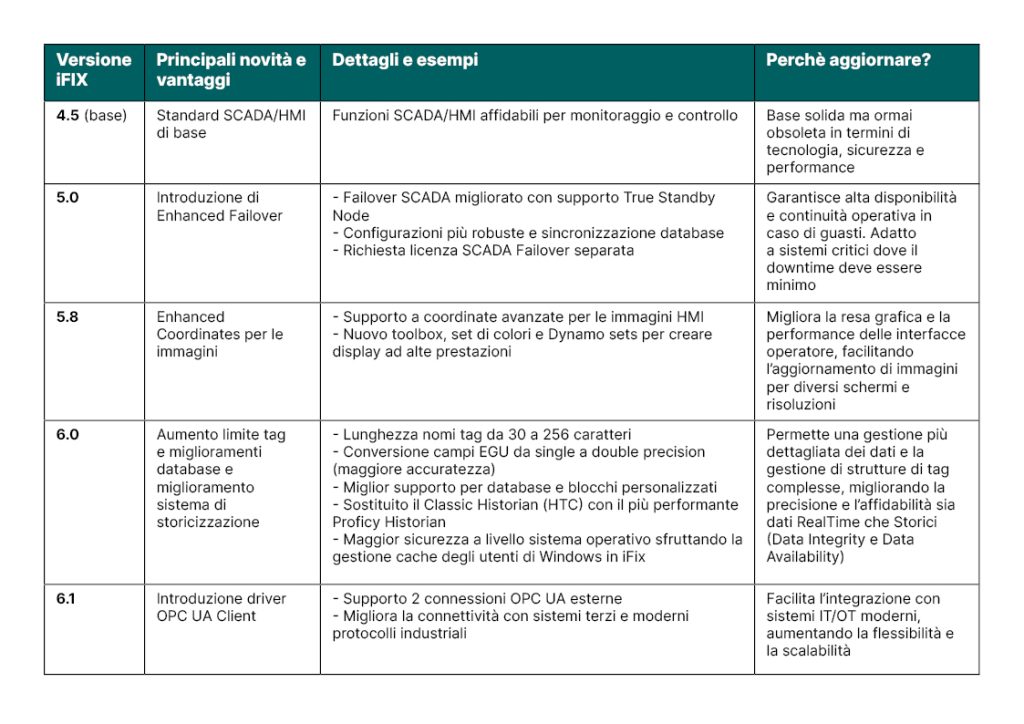
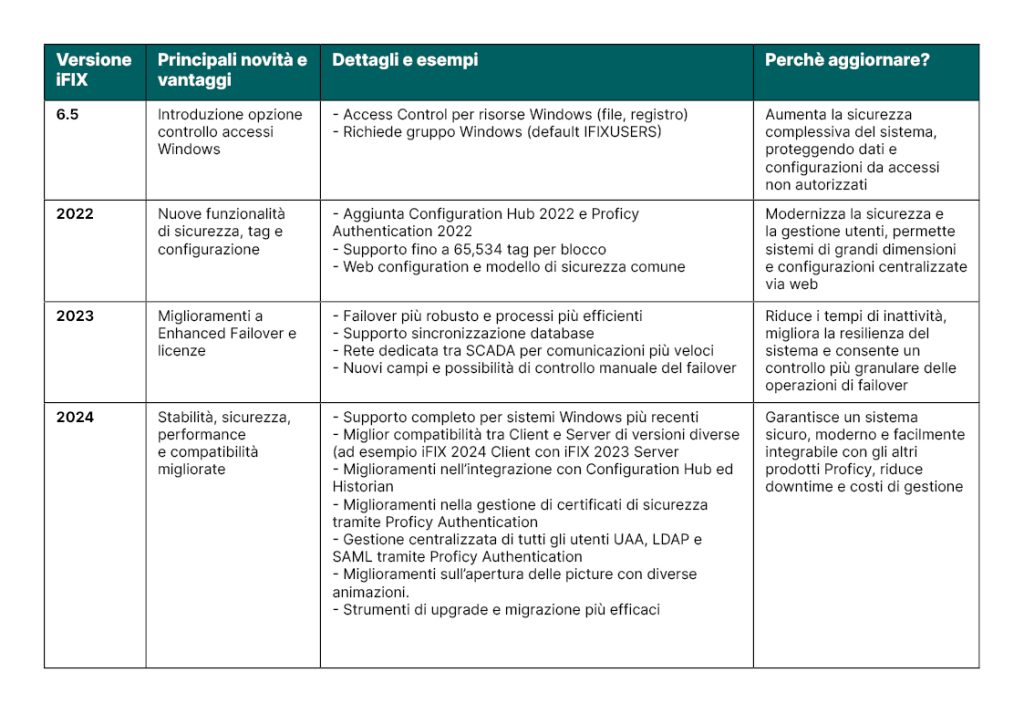
The transition to newer versions of SCADA platforms such as iFIX by GE Vernova It should be read in this light: not just as a technical update, but as a strategic choice for resilience, competitiveness, and regulatory compliance.
We therefore thought we would create a summary file that highlights the new features in the various versions of iFIX so that you can understand how they differ and why it is always advisable to update to the latest version.